2024-12-20
Dynamics of informal seed system
Publication
Publication
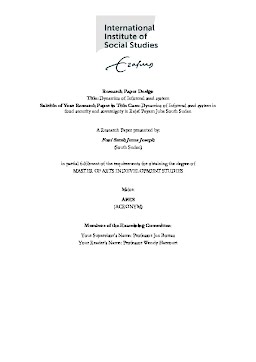
Dynamics of informal seed system in food security and sovereignty in Rajaf Payam Juba South Sudan
The informal seed system offers a great potential in addressing food insecurity though it has largely been under explored in research initiatives, lobbing and advocacy as well as policy development. ‘Small holder farmers’ are the main beneficiaries of this seed system in South Sudan and in the global South at large. Seeds from this system demonstrates qualities of adaptation to specific agro-ecological zones, biodiversity conservation and dietary diversification potential for food security and sovereignty. Even so smallholder farmers find themselves faced with this contradiction of obtaining certified seeds from the formal seed (FSS), intermediate seed system and through the informal seed system (IFSS) through seed exchange and seed saving to addressing food insecurity. This research investigates how the informal seed sector commonly used by smallholder farmers contributes to food security and sovereignty in Rajaf Payam Juba South Sudan. This is addressed through engaging in understanding the everyday practice influencing seed sourcing and preferences, opportunities and tensions in the IFSS and how this contributes to food security and food sovereignty. This research uses moral economy approach and Feminist Political Ecology (FPE) approach as analytical tools.
| Additional Metadata | |
|---|---|
| , , , , , , | |
| Borras, Jun | |
| hdl.handle.net/2105/75684 | |
| Agrarian, Food and Environmental Studies (AFES) | |
| Organisation | International Institute of Social Studies |
|
Juma Joseph, Foni Sarah. (2024, December 20). Dynamics of informal seed system: Dynamics of informal seed system in food security and sovereignty in Rajaf Payam Juba South Sudan. Agrarian, Food and Environmental Studies (AFES). Retrieved from http://hdl.handle.net/2105/75684 |
|