2024-12-20
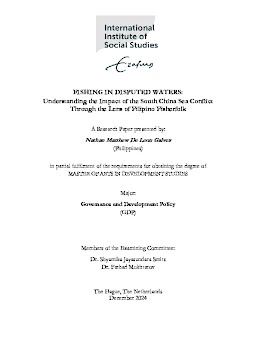
Fishing in disputed waters: Understanding the impact of the South China Sea conflict through the Lens of Filipino fisherfolk
Publication
Publication
Much of the literature on the South China Sea conflict have focused on top down state-centric perspectives of the issue. This study shifts the focus to Filipino fisherfolk operating in the disputed waters who face a multitude of challenges. Utilizing qualitative research methods, it shows how they perceive both the conflict and Philippine government policy affecting their security and the ways in which they cope. Examined through the frames of Human Security and Everyday Politics the findings reveal their livelihoods and dignity have been significantly affected and that they have been pushed by the Government’s policy into having to compromise on different elements of these. However, they have maintained their agency in throughout this and through acts of Everyday Politics seek ways to empower themselves and their fellows. The research also discusses how a bottom up approach adds nuance to the research by demonstrating how fisherfolk frame the conflict, brings up debates on Human Security vs State Security and finally, looks at the interplay between advocacy politics and Everyday Politics and whether they can potentially bring about lasting social or structural change.
| Additional Metadata | |
|---|---|
| , , , , | |
| Jayasundara-Smits, Shyamika | |
| hdl.handle.net/2105/75781 | |
| Governance and Development Policy (GDP) | |
| Organisation | International Institute of Social Studies |
|
De Leon Galvez, Nathan Matthew. (2024, December 20). Fishing in disputed waters: Understanding the impact of the South China Sea conflict through the Lens of Filipino fisherfolk. Governance and Development Policy (GDP). Retrieved from http://hdl.handle.net/2105/75781 |
|